The Power of the Resurrection: Rising Through Christ

This time of year, our hearts and minds naturally turn to the crucifixion and resurrection of our Savior, Jesus Christ. In a world where each generation seems to witness increasing darkness, this is a sacred time to pause and reflect on Him and on the infinite sacrifice He made to provide a way for us to return to our Heavenly Father.

In my own journey, there have been times when the world felt heavy with endings. Dreams that went to pieces, innocence wounded, broken relationships due to betrayal or misunderstandings, and heavy losses. At times, even faith can momentarily feel as though it has been laid in a tomb. We all know what it is to stand in the shadow of something that seems finished, yet the message of Easter, and the message of the gospel itself, is that in Christ, endings are not always endings. They may be the place where resurrection begins.

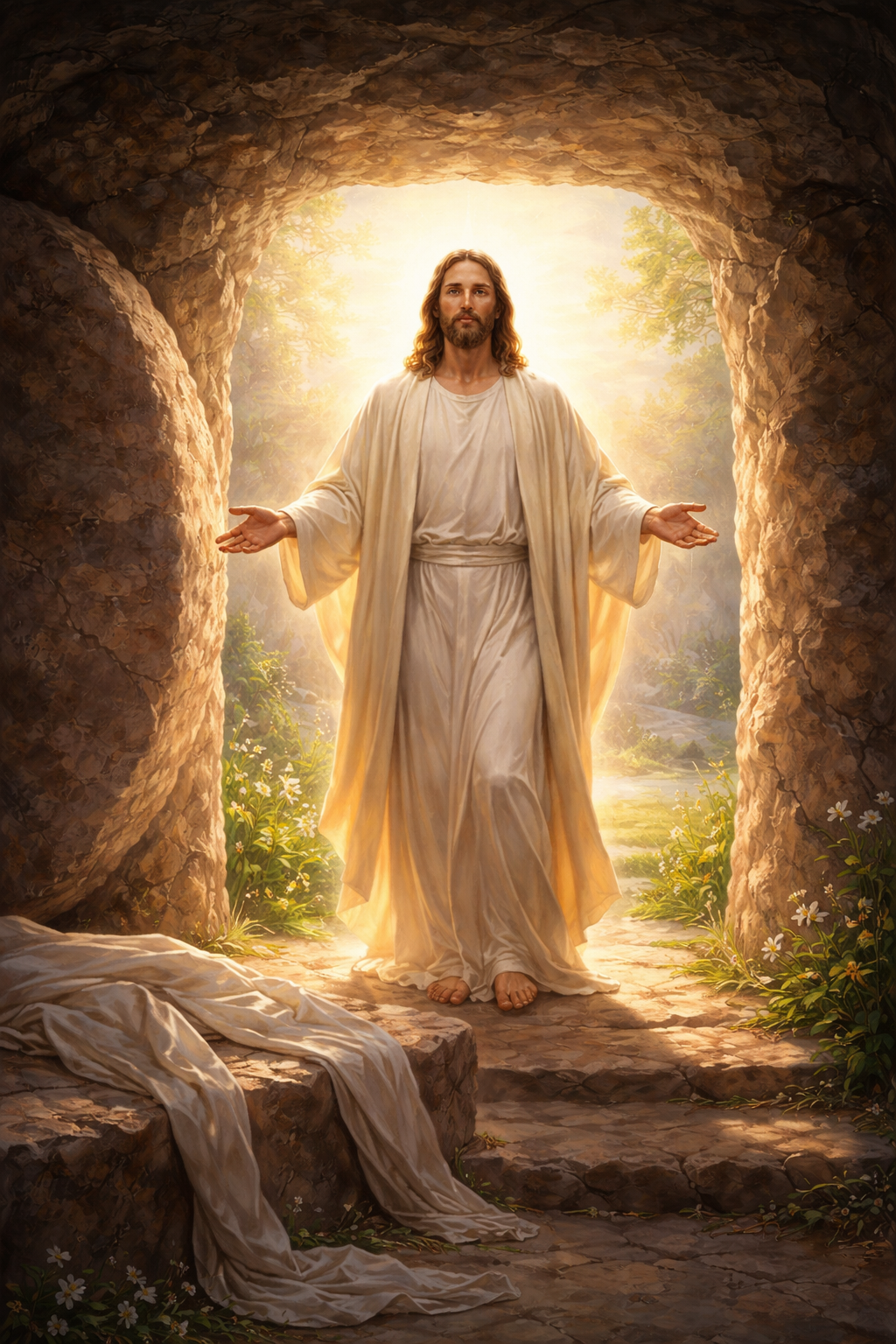
The Resurrection of Jesus Christ is not merely a beautiful story meant to comfort the sorrowing. It is the central miracle of all eternity; the witness that Jesus Christ broke the bands of death, overcame the grave, and lives still. Because He rose, death is not the end, and hope is not impossible. Because He conquered the tomb, no darkness is final.

Matthew 28:6 gave us words that would change the history of the world and the meaning of our lives.

He is not here: for he is risen, as he said.”

The Resurrection Is Literal, Glorious, and Universal

For Latter-day Saints, the Resurrection is not symbolic alone. It is physically real; one of the great pillars of our faith. Jesus Christ rose with a glorified body of flesh and bone, and through Him all mankind will be resurrected.

The Book of Mormon teaches this same message:

Now, there is a death which is called a temporal death… if Christ had not risen from the dead, or have broken the bands of death that the grave should have no victory, and that death should have no sting, there could have been no resurrection.” Alma 11:42

Through this we are given the promise:

“The spirit and the body shall be reunited again in its perfect form.” Alma 11:43

By this, we know that every grave will one day yield its dead because every separation caused by death is temporary, and every ache of parting will one day be answered by the power of the Living Christ. That is not poetic exaggeration; it is the promise of heaven.

Paul wrote:

“For as in Adam all die, even so in Christ shall all be made alive.1 Corinthians 15:22

Why the Resurrection Matters Now

The Resurrection isn’t just a promise for the afterlife; it is a lens for this life. It tells us that injustice is only a temporary ruler and that suffering, however loud it screams, is not the author of our destiny. Because He rose, we are no longer defined by our gravity, the weights that pull us down, or the weaknesses that hem us in.

This lens becomes even clearer when we actually turn toward Him. When we reach out for His comfort in our grief, seek His help in our struggle, or offer repentance in our quietest moments of regret, the blurry edges of our lives begin to sharpen. By doing so, the blurry edges of our lives begin to sharpen. We start to see that we aren’t just waiting for a future heaven; we are being actively mended in the present—invited into a light that doesn’t hide our flaws, but instead makes us whole.

The Resurrection declares that God is in the business of restoring what seems lost. No wound is beyond His reach, and no life is too shattered for Him to gather. Jesus said:

“I am the resurrection, and the life: he that believeth in me, though he were dead, yet shall he live.”

John 11:25

This is true physically, eternally, and literally, but there is also a pattern in it for the soul. If His power can call a cold body from a grave, it can certainly call a weary soul toward a new beginning.

Putting Off the Old Self

While we should not confuse spiritual rebirth with the literal Resurrection, the two are deeply connected in meaning. Christ’s victory over death shows us the pattern of divine transformation. Because He rose, we know that what is fallen can be raised, what is broken can be remade, and what seems lost can live again. The scriptures often speak of this inner rising as becoming a “new creature.”

Paul wrote:

“Therefore if any man be in Christ, he is a new creature: old things are passed away; behold, all things are become new.”

2 Corinthians 5:17

And to the Saints at Rome:

Likewise reckon ye also yourselves to be dead indeed unto sin, but alive unto God through Jesus Christ our Lord.” Romans 6:11

That phrase is so powerful: dead unto sin, but alive unto God.

There is a kind of death that must happen in all of us. The old pride. The old bitterness. The old fear. The old need to control, to retaliate, to cling to pain as identity. The fallen self does not surrender easily. But Christ invites us into a holy exchange: to let the natural man die so that something holier may rise.

In my own journey, there was a time when the old self in me had to die; the part shaped by pain, fear, and brokenness. Through Christ, I began to rise into something new. He did not simply help me survive; He changed me. What felt buried began to breathe again, and I came to understand that because of Him, renewal is real.

Mosiah 3:19 expresses this as well:

“For the natural man is an enemy to God… unless he yields to the enticings of the Holy Spirit, and putteth off the natural man and becometh a saint through the atonement of Christ the Lord.”

This is one of the clearest descriptions in scripture of what it means to spiritually rise. We put off one nature and begin to take on another, not by our own willpower alone, but through the Atonement of Christ.

Becoming More Spiritual While Still Mortal

It is important to understand that we do not stop being human, nor should we despise our humanity. Jesus Himself came in mortality and sanctified human life by living it perfectly, showing us that it is humanly possible to be like Him. The goal is not to become less human but to become holy in our humanity; to have the spirit govern the flesh rather than the flesh govern the spirit.

Paul said:

“For to be carnally minded is death; but to be spiritually minded is life and peace.” Romans 8:6

This is the great work of discipleship; to live in the body without being ruled by the appetites of the fallen world. We strive to feel deeply without being consumed by darkness, to suffer and still choose faith, to be wounded and still choose love, and to be mortal and yet carry heaven within us.

Latter-day scripture teaches the same principle:

“For notwithstanding they died, they also rose again, a spiritual body.”

D&C 88:27

And also:

“Ye are little children and cannot bear all things now; ye must grow in grace and in the knowledge of the truth.”

Doctrine and Covenants 50:40

This growth expands line upon line, not instantly. Through Christ, we are changed over time, giving the soul opportunity to begin rising above old bondage. This promotes a softer heart and a clearer mind. A once-fractured life can begin to reflect the image of Christ. This, too, is a kind of rising.

I have come to know this in my own life. There were seasons when I could not bear all things at once, when pain, confusion, and the weight of mortality seemed too much to carry. Yet the Savior did not ask me to become whole in a day. He invited me to walk with Him, and in that walk He has taught me slowly, mercifully, and with great patience. Through Him, what was once broken has begun to mend, what was once clouded has begun to clear, and the old self has gradually made way for something more refined, more faithful, and more filled with His light.

The Daily Resurrection of the Soul

There are many tombs other than the grave. Some people live in the tomb of shame or resentment. Others in addiction, or in grief so deep it numbs the light. Some are trapped by old stories about themselves that were written by trauma, rejection, or sin. But Christ still calls people out of tombs.

He called Lazarus by name, and Lazarus came forth. That miracle was a witness of Christ’s divine power over death, but it is also a tender reminder that the Savior speaks personally to each soul. He does not merely rescue humanity in the abstract. He calls individuals, and He knows us all.

Because He Lives, We Can Rise

The message of the risen Lord is not only that we will live again after death, though thank God that is true. It is also that through Him, we do not have to remain buried in regret, fear, or anger. Christ rose with a glorified body, triumphant over death forever. Because of that, every one of us may look forward to a literal resurrection through His grace. But until that day, He also offers us a spiritual rising: the chance to become new, to be born again, to put off the old and walk in newness of life.

Paul wrote:

“Even so we also should walk in newness of life.” Romans 6:4

And the Savior declared to Martha:

“I am the resurrection, and the life.” John 11:25

He is the Resurrection, and because He lives, hope lives also. Healing lives in Him, and so does the promise of becoming something more than we once were. No faithful soul is beyond renewal through His power. The stone was rolled away long ago, and because it was, we too may rise—not just once at the end of time, but every single morning that we choose to reach for Him.

When Spring Turns to Storm: A Lesson in Opposition and Becoming

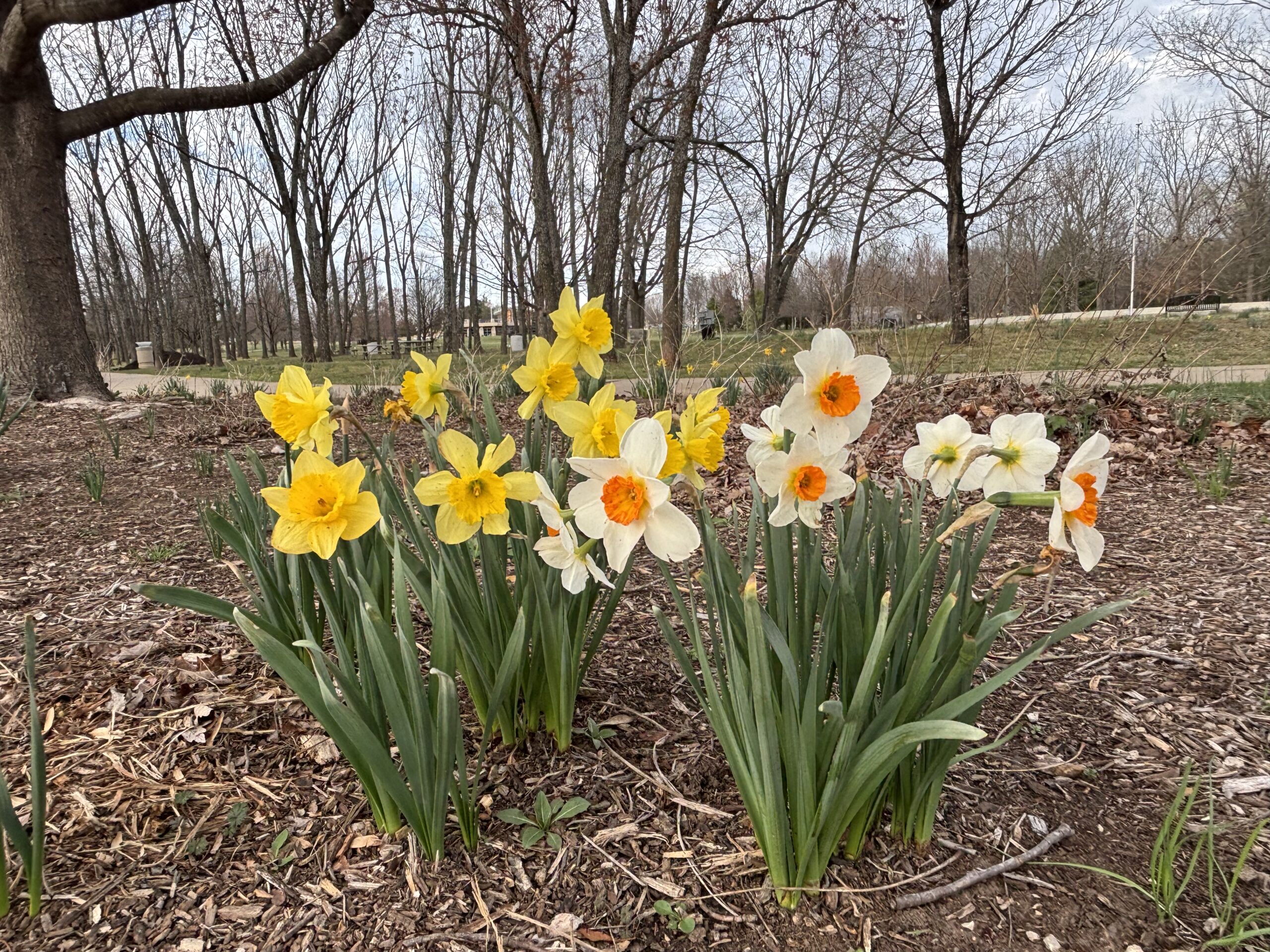
There is something sacred about the first breath of spring. After months of stillness, the earth awakens. The air softens. Light lingers longer in the sky. Buds begin to form where there was once only barrenness. It feels like life itself is returning—quietly, steadily, faithfully.

And with it, something awakens in us: hope, energy, and a desire to move, to grow, and become. We begin to feel aligned—closer to God, more aware of His hand, more intentional in our efforts to live Christlike lives. We serve more, we forgive more, we try again.

It feels like we have stepped into a new season.

That is what it has felt like these past two weeks. An early spring wafted in on the heels of winter–and then, without warning, a snowstorm came, ushering in high winds and extreme dips in temperature–all warmth was stripped away. Within hours, the joy that had been felt was gone.

How often is this the pattern of our spiritual lives? We step forward in faith… and resistance meets us. We choose light… and darkness presses in. We begin to heal… and old wounds resurface. It can feel confusing and so unfair.

Why, when we are trying to do good, does opposition seem to increase? Yet this pattern is not accidental. It is eternal.

“For it must needs be, that there is an opposition in all things.” — 2 Nephi 2:11

Spring does not cancel winter nor does light eliminate shadow. Growth does not come without resistance. Rather, opposition is often the very evidence that growth is taking place.

Storms Do Not Mean Failure

When the storm comes, it is easy to believe something has gone wrong.

We may think:

  • I was doing so well…
  • Why is this happening now?
  • Wasn’t I moving in the right direction?

But what if the storm is not a sign of failure—What if it is a sign of movement? Elder Jeffrey R. Holland once taught:

“So be kind regarding human frailty—your own as well as that of those who serve with you… Except in the case of His only perfect Begotten Son, imperfect people are all God has ever had to work with.”

And yet—He still works with us. Even in the storm–especially in the storm.

The Adversary and the Rising Wind

There is something else we must understand. When we begin to live more Christlike lives—when we forgive, when we serve, when we seek light—we become a threat to darkness, and darkness does not remain still. It pushes back.

President Russell M. Nelson has said:

“The Lord does not require perfect faith for us to have access to His perfect power.”

But the adversary knows this. He knows that even a small step toward Christ invites power into our lives, and so he seeks to disrupt it. Not always with dramatic destruction. But often with:

  • discouragement
  • fatigue
  • doubt
  • distraction

A sudden storm after the warmth of spring, and yet beneath the surface something else is happening. Storms, though harsh, serve a purpose. They strengthen roots, deepen resilience, and test what is truly anchored

A tree that has never felt the wind cannot withstand it just as a soul that has never faced opposition cannot fully understand faith. What feels like regression may actually be refinement.

A Wider View of the Season

If we step back, we begin to see spring was not lost or taken from us. It was only interrupted—briefly—by a necessary part of the process. Because true growth is not a straight line. It is a pattern:

Light → resistance → deeper light Each cycle strengthening us more than the last.

What We Can Do in the Storm

So what do we do when the storm comes? We do not abandon the path or retreat into fear. Instead we do what we were already doing in the light:

  • We pray
  • We serve
  • We forgive
  • We trust

Even when it feels harder, especially when it feels harder. Because that is where transformation happens.

We are promised that the storm will not last. It never does, and when it passes, something remarkable becomes visible. The roots are deeper, and the branches are stronger. The light feels even more precious than before, and we realize we are not the same as we were when spring first came. We have become something more.

If you find yourself in a storm today, after a season of light, do not lose heart. You have not done anything wrong. You may, in fact, be doing something very right. Because the path of becoming like Christ has always included both:

the warmth of spring

and the refining of the storm

Both are necessary to become what He sees in us.

Beyond the Veil: What Our Loved Ones Continue to Build

This month marks the anniversary of my mother’s passing.

Anniversaries like this have a way of slowing the heart. They invite us to step back from the pace of life and reflect on the people who shaped us, taught us, and loved us into becoming who we are.

My mother was one of the first people who taught me about Jesus Christ and the whisperings of the Holy Ghost. Long before I understood theology or doctrine, she showed me what it looked like to trust the Savior, to pray, and to listen for quiet spiritual impressions.

When someone who shaped our faith leaves this life, the grief can feel deep and personal. Yet the scriptures invite us to see loss from a wider, eternal perspective.

Viewing Loss Through the Lens of Eternity

The scriptures remind us that death is not an end but a transition. Alma taught that when we leave this life we enter a different sphere of existence, continuing forward in God’s plan:

“The spirits of all men, as soon as they are departed from this mortal body… are taken home to that God who gave them life.”

— Book of Mormon, Alma 40:11

The Savior taught that God “is not the God of the dead, but of the living.” In other words, those who have gone before us are not lost to existence. They continue to live, to grow, and to participate in the great work of God.

In moments of grief, it can feel as though the story has stopped. But heaven tells us the story is still unfolding. From an eternal perspective, mortality is only a chapter in a much larger narrative. Our loved ones step into another sphere of learning, service, and preparation. The work of salvation does not pause when a life ends; it continues beyond the veil.

What Are Our Ancestors Doing?

Latter-day Saint doctrine offers a profound insight into what our loved ones may be doing after they leave mortality. The spirit world is described as a place of learning, teaching, and preparation. The gospel continues to be preached there. Many who passed through mortality without a full knowledge of Christ are taught the gospel, and the work of redemption continues.

Our ancestors are not idle. They are learning, growing, teaching, and preparing souls to receive sacred ordinances. In many ways, they are helping prepare the very people whose names we later bring to the temple.

President Russell M. Nelson has taught that the gathering of Israel occurs on both sides of the veil. This means that while we labor here on earth—sharing the gospel, researching family history, and performing temple ordinances—there are faithful spirits beyond the veil working with equal devotion.

It is a collaborative effort between heaven and earth.

What They Are Building

When we consider what our ancestors may be building, we begin to see a beautiful partnership. They are helping prepare hearts and guide descendants. They are participating in the unfolding work of redemption that connects generations together.

Scripture often speaks of hearts turning—children to fathers and fathers to children. That turning is not merely sentimental; it is deeply spiritual. It binds families across centuries and creates a chain of covenant relationships that stretch beyond time.

In this sense, our loved ones who have passed on are still helping to build the kingdom of God. They are helping build faith in us, building bridges between generations and in ways we often cannot see, they may even be helping guide us toward the work that still needs to be done.

Continuing Their Legacy

Grief often asks a question: What do I do now that they are gone?

The gospel gently answers that question. We continue their legacy. If they taught us faith, we deepen our faith. If they taught us kindness, we extend kindness further. If they taught us about Christ, we help others come to know Him.

Every act of discipleship becomes a continuation of the foundation they helped lay. When we pray, when we listen for the Holy Ghost, when we serve others, and when we help gather Israel, we are building upon the spiritual inheritance they passed to us. Their influence does not end with their life. It continues through the choices we make.

Participating in the Gathering of Israel

One of the most powerful ways we honor those who came before us is by participating in the work of gathering Israel. The gathering happens in many ways:

Sharing the message of Christ.

Helping others come unto Him.

Researching family history.

Performing temple ordinances for those who have passed on.

Every time a name is found, every time a story is remembered, every time a temple ordinance is performed, we strengthen the eternal link between generations. The work that happens on earth and the work that happens in the spirit world meet in sacred harmony. In that way, the separation we feel from those who have passed is not permanent. It is part of a much larger collaboration between heaven and earth.

A Personal Reflection

When I think of my mother, I do not first remember grand moments or dramatic experiences. I remember the quiet things. I remember her laugh, the softness of her voice when she spoke, her tone ever gentle. I remember the way she spoke about Jesus Christ as if He were someone she truly knew. I remember the way she taught me to pray and the way she listened for the gentle whisperings of the Holy Ghost. As a child, I did not fully understand how sacred those lessons were, but over time I have come to realize that those small, faithful moments shaped my life in profound ways. Even now, though she has stepped beyond the veil, the spiritual foundation she helped build in my heart continues to guide me. Her testimony did not end with her life; it lives on in the faith she planted within me

Though I cannot see her, I trust that she continues forward in God’s great work. And here on earth, I will continue the work she helped begin. Because the story of our families—the story of God’s children—is not a story that ends with death.

It is a story that continues on both sides of the veil.

If you enjoy these articles about faith, family history, and the Restoration, you can support this work and receive early access to my writing, videos, and other works on Patreon.

When Hearts Are Aligned

Becoming One With the Savior

In recent years I have made a change in how I stay informed about the world. I have largely stopped watching the news and instead choose to read it. When events unfold on a screen in real time—especially when watched continually—it can create a dark and heavy cloud over the mind and heart. By reading the news instead, I am able to stay informed and understand what is happening in the world without exposing myself to the constant images of violence, tragedy, and suffering that often accompany televised coverage. The written reports provide the information I need without overwhelming the spirit.

Even so, for many people, simply reading the news can still bring feelings of anxiety and fear. The challenges we see unfolding in the world can feel heavy and uncertain. One of the ways I have learned to become stronger in the face of adversity is by striving to draw closer to the Savior. The scriptures teach us to become like Him in all things, and part of that process is strengthening our spirits. As our hearts become more aligned with Christ, we develop the capacity to endure trials that might otherwise feel unbearable. The burdens may still be heavy, but through Him we gain the strength to press forward, even when the path before us seems difficult or impossible.

In recent days, the news has been filled with reports of growing conflict and tension in the world, including the ongoing war with Iran. Events like these naturally stir concern and uncertainty. It is not difficult to feel anxiety about the future when we see instability among nations and hear constant discussion of what might come next. The scriptures warned that such times would come. Jesus taught that in the last days “men’s hearts [would fail] them for fear” as they looked upon the things happening in the earth (Luke 21:26). This phrase is deeper than it may appear at first glance. It is not merely a reference to physical weakness, but to spiritual and emotional collapse—hearts overwhelmed by fear, uncertainty, and despair. We are human, and if not spiritually in tune, we leave a crevice open for the adversary to step in.

The adversary understands the power of fear. When fear takes hold of the human heart, it weakens faith and clouds judgment. We begin to fall to pieces inside, becoming overwhelmed to the point that we feel incapable of functioning. It can cause people to bend under the slightest weight of trial or adversity. Yet the Lord never intended His people to live in constant dread of the future. The scriptures consistently remind us that while difficult times will come, the faithful are not left without strength or guidance. The Savior Himself declared, “Be not troubled” (Matthew 24:6). The difference between those whose hearts fail and those who endure is found in where their hearts are anchored.

To align our hearts with Jesus Christ is to anchor them in something eternal and unshakable. Christ Himself lived this pattern during His mortal life. Though He faced rejection, suffering, and ultimately the weight of the world’s sins, His heart remained perfectly aligned with His Father. Because of that unity, He received divine strength to endure what no other person could bear. The same principle applies to us. When we seek daily communion with Heavenly Father through prayer, scripture, and obedience, we open ourselves to divine help. The Lord promises that those who trust in Him will be strengthened beyond their natural capacity. This doesn’t mean things become easier, but it does strengthen us to be able to bear trials without falling into dysfunction and fear.

The Book of Mormon echoes this promise. Nephi taught that the Lord “shall prepare a way for them that they may accomplish the thing which he commandeth them” (1 Nephi 3:7). That promise extends to every challenge we face—whether it be personal trials, trauma, abuse, or the heavy uncertainties of the world around us. Aligning our hearts with Christ does not remove hardship, but it changes how we experience it. Instead of being crushed by the weight of our trials, we are given strength to carry them.

In the Doctrine and Covenants the Lord warned that in the latter days “men’s hearts shall fail them” (D&C 45:26), yet He also offered reassurance to those who remain faithful. The Lord repeatedly promises peace to those who turn to Him. King Benjamin taught that when we yield our hearts to God and follow Christ, we become spiritually changed, having “no more disposition to do evil, but to do good continually” (Mosiah 5:2). A heart that is changed in this way becomes resilient. It is not easily shaken by the storms of the world.

The times we live in—and the times that may yet come—will test faith in many ways. But the scriptures also promise that those who remain close to the Savior will be sustained. When our hearts are aligned with Him, fear loses its power to cripple us. Instead of collapsing under the pressures of the world, we find strength, hope, and even peace in the midst of uncertainty. The Savior invites us to draw near to Him now, to cultivate faith, love, and obedience. As we do, we will discover that the promise is true: when our hearts are united with Christ, they will not fail us.

If you enjoy these articles about faith, family history, and the Restoration, you can support this work and receive early access to my writing, videos, and other works on Patreon.

The Perfect Fit

A few months ago I was in Nauvoo, Illinois, taking a stroll around the parking lot of the church. I was in one of those modes of trying to figure out where I fit in. It’s a meandering thought that plagues all of us throughout our lifetime. We have these moments where we don’t feel like we belong or understand where we fit in. The question becomes even more profound after we have experienced trauma, therefore, after the abuse I suffered as a child, I was in a constant mode of feeling like I didn’t belong to anything or anybody. I thanked God that I have a jolly heart. I leaned on that, riding the wave of life, trying to be as happy as I could, but there was always a lingering pull toward some destination I had no idea of. It was an unnamed territory. This left me feeling lost and unsure of myself.

I would watch many friends around me engage in routine social pleasures, but I often stayed aloof. A good portion of myself was happy to be alone because I was still in my safety box. I’ve always been an introvert with extroverted tendencies, someone who craves social interaction and fun yet values the times I can crawl into my shell and hide from everyone. There’s a particular scene in Rudolph the Red-Nosed Reindeer where Rudolph is trying to find his parents and his girlfriend. As he travels, he begins to grow, and along the way, he finds a couple of polar bears to play with, but his joy doesn’t last long because he hears the roar of the abominable, and he has to move on. That is how it always felt. I had an unstructured childhood, constantly on the move, staying in places for a little while, making friends, and then we would move again. Today, I’m constantly on the move, doing firesides and meeting new people. I’m not complaining at all; it’s one of the most amazing blessings in my life, but still, there’s that little part of me that wonders where I fit in, and that was my question for that day: where do I fit in because I do not feel like I fit into the world?

After becoming a member of the Church of Jesus Christ of Latter-day Saints, I was propelled into a world I wasn’t prepared for. That is not to say I was not happy, quite the opposite. But suddenly, this shift required me to be out of my safety box. That is when I began to do the firesides, standing in front of hundreds and sometimes thousands of people and speaking about the importance of following the Holy Ghost in all things, aligning yourself with the Savior, and forgiveness.

Fast forward 20 years later, I have learned much on this journey and grown exponentially. I understand the mission I’ve been given to reach out to people and help heal hearts and in the process I’ve healed as well. But there I was on that hot summer day musing in the parking lot of the church. I looked up at the Nauvoo Temple and silently said, “I have never felt like I fit in. Never. Even though I have good friends and feel close to people, I just don’t feel like I fit into the world.”

I no sooner uttered the question when a voice said to me, “you didn’t come into this world to fit into it you came to change it, all of you did.” In that instant, my longing for worldly connection and acceptance faded, replaced by a broader perspective. This isn’t our home we came to, this is a place we are hoping to teach, learn, and grow so that we may return to our heavenly home. We are here to purify our hearts and help change the hearts of others. Though we are often reminded to be in the world and not of it, this truth can be difficult to grasp when raised in a culture that values conformity. Those who choose a different path may inevitably feel isolated. Many who walk the way of Christ and try to emulate him will feel this way, after all, He was rejected by the world. So it’s natural to feel like you don’t fit in. I valued what I had learned that day in the church parking lot, but imagine my joy when, during the October General Conference, Brother Brad Wilcox made the statement “do not let the world change you, you came here to change the world!” I nearly fell off of my chair and I had to I smile.

So, what does this mean? Is it beneficial to feel like an outsider? Not necessarily. However, it’s important to understand that as a follower of Christ, you may often experience a sense of disconnection from the world. This feeling is not a negative reflection on you but rather a testament to your unique mission. Rather than trying to find out where you “fit in,” look for what your purpose is. Finding your purpose will naturally draw to you people and situations that fit who you are and why you are here. In this manner, you will find connection and feel valued and needed. Once that happens, you will understand that you never came here to conform to the world but instead to bring positive change and purify hearts so that people can conform to Christ instead of the world.

Follow Me

Last night, I was watching the final episode of The Chosen, season one. They touched upon a topic that echoes the message I have striven to express in every fireside I have done; forgiveness and letting go of the past so we may fully embrace the Gospel today. In the scene, Jesus and the disciples are on a journey, and some of them begin to grow concerned because they feel they are getting off track. When they start to point out to Jesus that there is a safer way to where they are going, he informs them that they are going to Samaria. The announcement causes grave concern for fear of violence due to the turbulent history between the Samaritans and Jews. Big James comes forward and says,

“But Rabbi, the Samaritans…”

“What is your point, Big James?” Jesus asked.

“These were the people who profaned our temple….” Big James answered, to which Jesus so wisely replied;

“And we destroyed their temple a hundred years ago, and none of you here were present for any of these things.” 

In this statement, Jesus brings attention to the dangers of focusing on negative or violent events of the past, including human error. His message to them expresses the reality that we are surrounded by now; that if focus remains on mistakes of the past and holding grudges, then focus is not on the gospel today and our role in it. This has been the experience of so many who have become caught up in doubt when faced with proven or perceived human error they have discovered in history. Once the door to that doubt is opened, testimonies are weakened, and in many cases lost. 

In journey to Samaria scene, the conversation ends by Jesus simply saying, “we’ll be fine …. follow me.” It is that simple, humans just seem to complicate it. We will surely be fine and need to lay aside concerns about a past that we weren’t even there to witness and see for ourselves. After all, how many of those mistakes are actually true and how many are based on speculation? When we see or hear things that cause doubt or fear as we are in the midst of building the kingdom and gathering Israel, we must remember those words… “we’ll be fine, follow me,” and move onward.

Those who truly know and love the Savior are drawn where the light is strongest. After many generations of living in spiritual darkness, where the light was very dim, there began to stir in the hearts of men a desire for truth to come forth. They yearned for knowledge that conformed more fully to the early teachings of Christ, without the added doctrines of men. Thus, was ushered in the time of the Reformation. Great ministers opened their mouths in defense of the Word of God, laying down their lives in the process. They were persecuted and forced to flee in secret, until the wave of aggression carried them over to the American Colonies in search of religious freedom.

As generations passed in the Colonies, many different religions were organized. They began to quarrel one with the other over who was the most correct. Thus was the pattern of events that led to the Restoration in 1830; the ebb and flow of activity that prompted people to speak and move for reasons they did not completely understand but we see today. When one studies over the trials, joys, successes, sorrows, and enlightenment that coursed through those early pioneers of the Reformation and Restoration, it is clear to see why their testimonies were so strong. In contrast, the times we now live in have created an atmosphere that makes it more difficult for many to maintain an unbreakable testimony, and the adversary knows that he can use the past to shake the foundations of even the strongest fortress of faith. However, we always have at our hand the strongest armor and the most powerful defense if we just turn to the Savior.

Those of you who know my story are acquainted with the many traditions I was raised with; traditions I found later to be skewed or untrue altogether. Unfortunately, there were also some unpleasant incidences and human error I found to be true in Church history; choices made in anger that created discord. But who am I to judge? I wasn’t there and people often say things they do not really mean to when in a temper. I shudder to think of where I would be now had I put aside my testimony because someone in the past or present committed human error, after all the gospel is perfect so why would I leave it due to someone else’s mistake? I was fortunate to have a mother who taught me to move forward if the Holy Ghost is leading me; to keep my eyes, mind and heart on the Savior so acutely that when doubts do creep in as a result of something I read or hear, I do not hesitate to keep on my path. As I have climbed such mountains, I was given peace of mind.

We must always remember that in any organization and history thereof, one will find a great amount of good. However, a foundation that has good intentions will always have mysteries, speculations, hearsay, misconceptions, and mistakes, all of which lead to contention and division– a complex recipe for chaos that is the adversary’s favorite dish to serve. Why? Because it is an endless cycle he can draw us into that will occupy our thoughts to the extent that we become consumed, our minds and hearts twisted until we find our testimonies slipping away. At that point we are no longer focused on the Gospel and he has won.

The peoples of the past were like the people of today are; human beings, most of whom had good intentions but made mistakes along the way. Those people have the same right to forgiveness as we do. It is wrong for us to condemn them or the Church for any errors that may have occurred. If the Savior can forgive them then we most certainly can and should. In these times it is vital to keep our focus on the Gospel today so that we can magnify it and enrich the lives of others through it. My focus remains on the Gospel, spreading the pure love of Christ, and moving forward because all will be well if we just follow Him.

The Holy Ghost Trumps Everything

This past year has been a monumental shift on so many levels throughout the world. Not one person has emerged unscathed, and we are still in the midst of the turmoil. The struggles for our health and livelihood are being played out in the arenas of government, social media, and even within our own family circles. Opinions and disputes have divided many, and the noise is so extreme that for some, it has drowned out the still, small voice. Compared to just a few years ago, so much has changed and seems out of character. In fact, society has striven at an accelerated pace to change the character of goodness to a point that it has become unrecognizable. What was once sound moral fiber is unraveling, and it is happening right before our eyes.

We were told of this time, long ago, and here it is before us; the impromptu seasonal weather changes, drought, social and moral decline, deviation from our Father in Heaven, worldwide catastrophic events, and a pandemic. In its true prophetic warning from passages written ages ago, what was once good is now called bad, and what was called bad is now labeled as good.

Matthew 24:8 tells us that these things are just labor pains, a time of warning for those who are listening, so they are prepared for the coming times. So should we live in fear of all of these signs? Goodness, no. Fear is not a characteristic of the Lord. We only fear when we do not know Him or His ways. It is wise to be observant and prepared, but more importantly to live life every day to its fullest. There are those who spend their whole lives focused on end times to such an excess that they forget to live, putting a strain on familial and social relationships. Their minds are so wrapped around the concept of the world ending soon, that they are failing to do the very work they came here for.

During his leadership, Wilford Woodruff, fourth president of the Church of Jesus Christ of Latter-Day Saints, was approached by several brethren who wanted his input on the timing of the second coming of the Savior. His answer was one of the wisest I have heard yet.

“I would live as if it were to be tomorrow, but I am still planting cherry trees.”(1) Here President Woodruff expresses the importance of living our daily lives in a functional, interactive, loving, and stable manner, building our spiritual environment in preparation for meeting the Savior, yet actively engaging in our temporal surroundings.

One vital process I believe we should all be involved in, concerning spiritual and temporal happiness in hard times, is the healing of our families from issues of the past and present. It is necessary to be a healthy and united family in order to not only withstand the times that are coming but to be worthy to stand in the presence of our Father in Heaven and his Son Jesus Christ. It is the responsibility of the generations alive today to work their way back, taking an extensive glimpse into their family’s journey to see where the paths have been fragmented. These altered paths have become overtaken by briars and thistles, causing many to deviate and go astray, becoming embittered toward siblings, cousins, parents, and children; a travesty that has built many thick, generational walls. These walls have cut asunder the relationships of many would-be friends and family members.

If there has been any time that the need was great to bring our families together it is now. Without that bond, there will be many who will scatter in chaos as times grow even darker. The change comes through forgiving and loving ourselves and one another. As we do so, we can let go of the issues we have been holding on to for generations. We cannot cling to those issues and the Savior at the same time, so it is vital to let the issues go and embrace Christ. As we do so we will be filled with the light of his pure love and our wounds will heal. If we will just take that step, He will hold us up and show us how to get through all of our trials, pain, and sorrow. We will become whole, and the reward will be a fullness of joy. Elder D. Todd Christopherson, a member of the Quorum of the Twelve Apostles of the Church of Jesus Christ of Latter-day Saints said of the Savior:

“We can turn to Him as we seek unity and peace within because He understands. He understands the struggle, and He also understands how to win the struggle.” (2)

I have always felt Christ in my life, even as a child. I encountered many difficulties while growing up, and it was not uncommon for me to talk to him in search of comfort. When I felt that there was no other friend to be had, I knew that He was there and would never leave me alone. Having the comfort of that bond has saved me in many ways from going down paths that would have endangered my spirit, and at times when I did fall by the wayside, His hand was always extended to help pull me up, I had only to reach for it.

The values I have gained through the knowledge of His love has made it possible for me to process the darkness that has surrounded members of both my father and mother’s family, allowing me to sift through the bitterness to find truth. It has been a long journey, filled with unexpected surprises, pain, fear, and hesitations but I have always walked forward because I knew I was supposed to. I knew that in all things I would be guided by the Holy Ghost if I had faith and would never be led astray. Even though at times there was no indication as to where I was going or what lay ahead, I have never been disappointed and always felt at peace.

This journey is ongoing. I am still learning and discovering as we should all be. Knowledge never decreases unless we allow it to. It is so interesting for me to look back upon the pages of what has brought me here, to examine my life. It puts into perspective the awareness that our Father in Heaven plans things out carefully, and that we are free to choose whether or not to go in directions in which we are prompted. How we choose defines our lives at that moment and determines whether or not we will increase or decrease in spiritual growth.

As I look back, I have seen the sorrow of electing to go my own way because of fear, the wisdom of choosing what is right, and the fulfillment of following the promptings of the still, small voice. In this strange and ever-changing season, it is so important to keep the Savior in our hearts at all times; to gather our families, to be aware of our surroundings yet mindful of staying focused on what we are here to do, and always rely on the Holy Ghost in all things–no matter how scary the world makes things seem. Remember that the Savior is your friend at all times, and He is always there with arms outstretched.

I learned from my mother at a very young age, that the Holy Ghost trumps everything. No matter what questions arise concerning contrasts in history, imperfect human behavior, the skewed perceptions of others, and how dark the world seems around us–this Gospel is true because the Holy Ghost has born witness to it, and He is the one who will never lie to us; indeed, the Holy Ghost trumps everything.

  1. Evans, Richard L., “The Power and Privilege of Repentance.”
    Conference Report, April 1950,
    pp. 102-106

2. Christofferson, D. Todd, “That They May Be One in Us.”
General Conference. October 2002
<https://www.lds.org/general-conference/2002/10/that-they-

A Song Every Day Keeps the Doctor Away

Music: The soft mist that settles into crevices where nothing else can reach.

-Kimberly Jo Smith

In life we experience so many degrees of trauma it is a wonder that we can gather a fraction of coherent thought or reasoning. But I have found that Heavenly Father has equipped us all with various forms of natural anti-depressants in the form of compassionate service, fellowshipping, art, reading, writing, positive media, and then there is music. I have found whenever a dark cloud forms over me that music is a driving force which dissipates that cloud very quickly.

Someone once asked me if I hum very often, for while in her home she noticed that I hummed a lot. I responded that I hum every day without even thinking and had done so since I was little. She then went on to say that it was an inner healing mechanism which had probably saved me in many ways because the vibration of notes carried throughout my body, creating a relaxing calm. I didn’t think about it much at the time but have since looked deeper into the effect music has on us physically, mentally and spiritually. In doing so I can see why the Lord made music so much a part of our lives and how the adversary has used it as well. There is a marked difference in the attitude and personality of those who listen to fun, uplifting music and those who listen to dark, degrading music of hopelessness. One brings a happy jolly disposition as well as healing; the other a dark, reclusive, and destructive personality. So it is indeed true we must always be wary of the kind of music we listen to.

As I considered the many elements behind our interaction with music I began to reflect about my own history with it. Many individuals have written me asking where that sound comes from, the style and harmonies that my son and I employ when we are on stage, and my first response is, “From the Tennessee mountains,” because that is where I am from and what has influenced me the most. But a more accurate answer would be from within.

The scriptures tell us that we all come to this earth with specific gifts and talents (quote) and to utilize them. My first memories involve music. My father always played the guitar and he was in a Bluegrass band and when I heard them play it moved something inside of me. He taught me and my sister in one sitting how to sing lead and how to do harmony, and we picked it up like it was one of our own limbs, a natural part of who we were.

When I grew older I noticed that certain music, particularly older, southern gospel genres, would bring tears to my eyes. Something about it touched me within. That is when I decided to dig into my heritage and see just how deep the music went. On my father’s Smith side I can trace music back to the 1830’s. Each generation had musical talents with some of Joseph and Emma Smith’s children and grandchildren composing hymns that were in Restoration hymn books. From the resources I found, the majority of my ancestors on the Smith side were very adept in vocal abilities as well. On my mother’s side music was also prevalent. Her family grew up in the East Tennessee Mountains where my Mammaw and Pappaw engaged in Sacred Harp singing, a raw type of gospel that originated in the Appalachian Mountains in the late 18th to early 19th centuries. (For a brief history visit fasola.org)

After researching my musical roots I came to a better understanding of why music is so embedded within me. It brought to me a realization of just how important it is to know one’s heritage, for it is that heritage which explains who we are and why we have some of the tendencies that we do. I do not believe an ancestor’s song dies when they leave this earth, it carries on to be realized in a more magnified manner for a different time. So now, when I am composing and writing I appreciate the source from where those talents came from; generations of ancestors and above all a Heavenly Father who gifted us with those talents.

There are so many stories to tell of our past and present in music, art, dance and many other modes which can uplift and heal. It is so important to cultivate any talent we have been given and use it to bring happiness to those around us.